Celebrating 2014 with Books

My two loves: tea and books

The perfect accompaniment to a great read

I love to share what I read. What I’m reading becomes the subject of my social media posts, my dinner time discussions with my family, my conversations with colleagues, and every so often, a conversation icebreaker with other fellow commuters. And though not every book makes its way to the blog, every so often, I write about the book I’m reading. At home, a good book and a cup of tea from my favourite teapot is the way I destress.

As we enter a new year, I’m curious to hear from you. What books have been important for you over the last twelve months, and what do you recommend reading in 2014?

Leave a comment on the blog, or if you’re in Toronto over the new year, tell us in person on December 31st.  If you can make it, let us know on the Facebook event here.

Below: the ten books that we discussed this year on the blog.

  1. The Elegance of the Hedgehog by Muriel Barbery (January)
  2. The Footsteps of the Prophet by Tariq Ramadan (January)
  3. Green Deen by Ibrahim Abdul Matin (February)
  4. Islam and the Destiny of Man by Gai Eaton (March)
  5. Muhammad: A Prophet for our Time by Karen Armstrong (April)
  6. Starbucked: A Double Tall Tale of Caffeine, Commerce and Culture (May)
  7. The Smart One by Jennifer Close (August)
  8. Instructions for a Heatwave by Maggie O’Farrell (August)
  9. The Lowland by Jhumpa Lahiri (December)
  10. North and South by Elizabeth Gaskell (December)

On Faith Friendly Communities

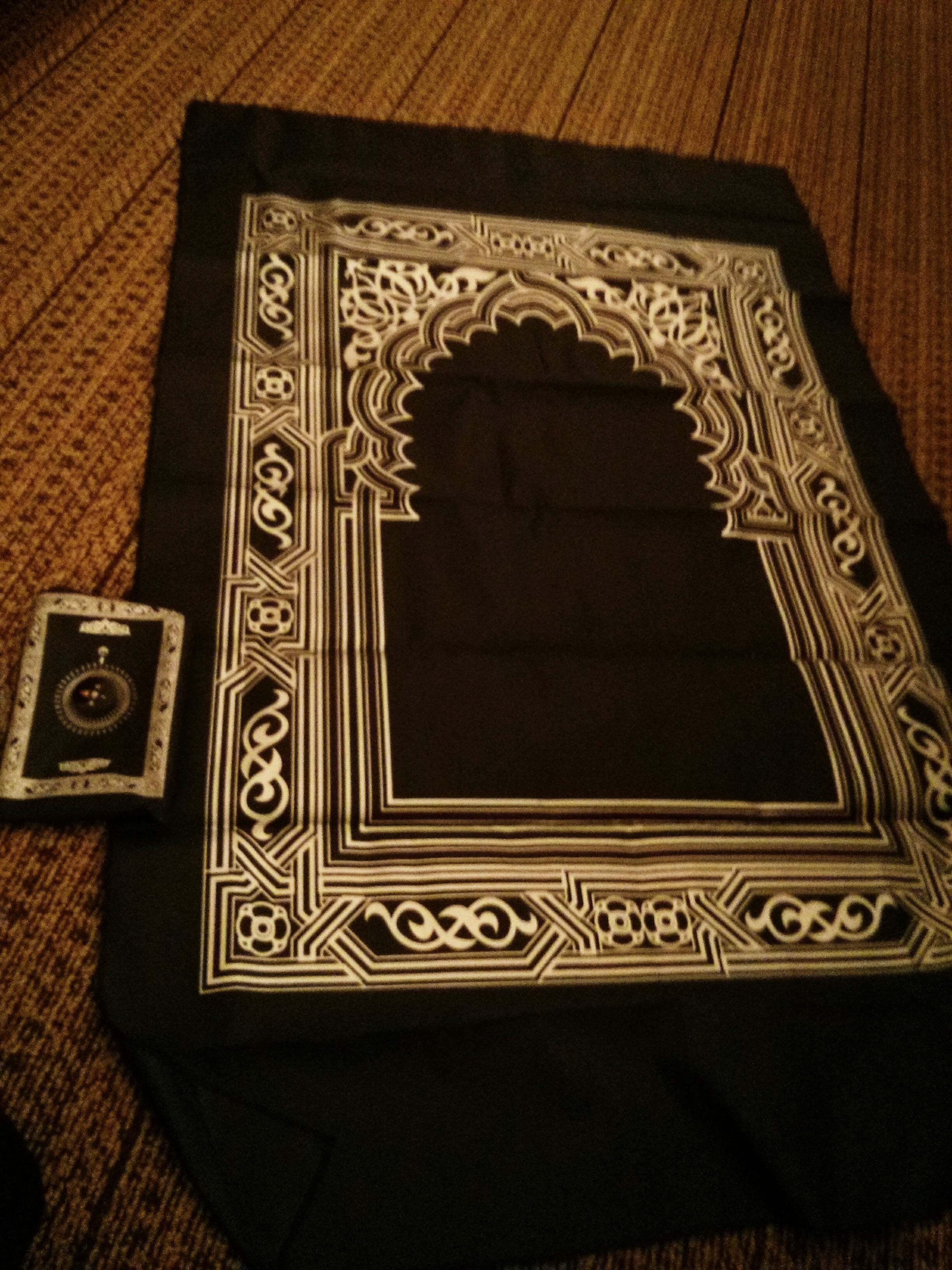
Urban sanctuaries, Bandung Indonesia

Urban sanctuaries, Bandung Indonesia

When at home, conversations about Islam, the sight of other people praying and the sound of the greeting assalamu alaykum (peace be upon you) are commonplace. But when I travel, or am in an unfamiliar environment more generally, encountering the same moments become vital for personal health. I need a quiet place to pray and meaningful conversations about faith to process my surroundings or to decompress from frequent questions about my background.

On December 14th last year, I stood waiting for the light to change at a downtown street. As I waited, I played absent-mindedly with my phone before flipping it on and turning to Twitter. But instead of retweeting messages about the event I had just left –  lunch at a downtown hotel where I had been celebrating the work of staff members whose secondment was coming to an end, the news that greeted me was that a massacre had taken place in Connecticut, killing 20 young children in the school.

Nearly a year later, I still remember that moment of feeling dizzy and shaky on my feet. In those seconds I couldn’t breathe, and all I wanted was a mosque, or any quiet place to sit and pray. But I was downtown, and there was no multi-faith space to be found. And so instead I rushed to the Vancouver Central Public Library, spread out my coat, and prayed behind a stack of books once I arrived.

As cities we have physical health strategies, strategies for a food secure city, programs and strategies to improve economic health, but we lack non commercial spaces for quiet and reflection.  In moments like that, we need spaces that offer refuge and solace in times of crisis. We need spaces without stimuli – not religious spaces necessarily, but places that nurture and nourish the spirit. We need spaces and services that help us improve our spiritual health in ways that resonate with our personal spiritual and philosophical traditions. We need cities that facilitate reflection.

A few weeks ago I experienced such a moment of reflection.  I was visiting University of British Columbia – Okanagan in Kelowna BC and when I arrived, I was delighted to discover that the Health and Wellness office offers a multi-faith room for the use of the campus community. The room isn’t big, but it has plenty of natural light and beautiful hardwood floors. In the cupboards in the back there are prayer mats, but the room itself does not have any religious imagery, making it accessible to individuals from a variety of religious and philosophical backgrounds. The best part of the Centre is its accessibility; it is centrally located on campus. And because the campus is small, the prayer centre is 5 minutes away from any of the other main academic buildings. (More information about the Multi-Faith space can be found here)

In my last visit to the Centre before I flew home, another student was already there when I entered. We exchanged a few words, I confirmed the direction of prayer in the room, and then we prayed together.  That combination – being greeted with kindness, the joy of hearing some of my favourite verses beautifully recited, and praying in a beautiful space brought tears to my eyes, and that moment is perhaps my favourite experience from my trip. It is, to use Karen Armstrong’s words, a ‘spot of time’ that I will return to again and again in my memory.

That moment, and that prayer space reminded me of the University of Toronto. I attended to the University of Toronto for graduate school, and while no school is perfect, U of T serves as an important model of what a faith friendly community can look like. In an interview with Sun TV, Mark Toulouse of Emmanuel College says the following:

“Three to four thousand Muslim students go to the University of Toronto in the St George downtown campus. In a thriving international city like Toronto where the evidence of a rich tradition of faith expression are all around us, it makes sense to work intentionally to create forums where we can have conversations and learn more about one other.. In many respects religious practices are private, part of one’s personal devotional life or personal beliefs. But religious practices across the world are also often public and rightly so… Religion is one of the most important forces that shape an individual’s life, and whenever people engage the public, they can only engage it with what the fullness of their life is. And part of fullness of that life is what shapes and forms them, and religious practice is among those things that do that.  We believe it is very important to encourage dialogue, to have conversation with one another.”

The University of Toronto is exceptional (and I’ve outlined some of the ways that they support a faith friendly campus below) but they are not alone. Across Canada, more and more universities are recognising that any robust health and wellness policy needs to consider spiritual health as well, and support the pastoral needs of its community members.

Research

The University hosts the Religion in the Public Sphere Initiative that “examines how religion manifests in public spaces, institutions, and interactions, and considers the challenges and possibilities of religious diversity in Toronto and around the globe.”  They hold events, curate religion related news on their website, and host a ‘religion themed’ service learning course.

In Vancouver, Simon Fraser University has been a leader in interfaith understanding. The Interfaith centre at the University has its own interfaith mission and charter that outlines how the university will meet the pastoral, educational, bridge-building and worship needs of its members. It’s a forward thinking, impressive set of principles that recognises that spiritual health is a core part of personal wellbeing and success.  There is also a Dispute Resolution proposal that is clearly outlined on the website. In addition, the University is continually offering dynamic, relevant programming through the Centre for the Comparative Study of Muslim Societies and Cultures that is available to the students and non-students alike. Within the History department, it is possible for students to pursue a concentration in Middle East and Islamic History. Over the past year or so, I’ve been so grateful for the presence of the CSMSC and the breadth and depth of the scholars they have brought to Vancouver to give public lectures.

2) Faith Based Perspective to Services/Student Development

At the University of Dalhousie, spiritual wellness is an important part of how health and wellness is understood.  The  Dalhousie Multifaith Centre features the events of diverse groups (including a group that looks at Women and Spirituality) and in general aims to provide “a complete education (that) addresses the whole person: body, mind, and spirit.”

Like Dalhousie, most universities have some sort of chaplain system in place. In one of the most interesting projects in Canada, students at the University of Toronto, fundraised over $70,000 in Sept 2012 for Canada’s first full-time Muslim chaplain. The Muslim Chaplaincy at the University of Toronto offers classes, counselling and dialogue programs and is a project that offers fascinating possibilities of how student affairs can provide indepth pastoral care. It is a project to watch, learn, and benefit from.

c) Athletics

Women in headscarves feature on the U of T athletics marketing materials and signage. On a personal note, seeing myself reflected in materials reminds me that exercise and athletics matter. There are ways to exercise and swim while still being covered, and health and faith are not incompatible. The Athletics facility also offers one hour of women only time daily in the weight room and reaches out to different populations at U of T to encourage them to prioritize their physical wellbeing.  (Their postcards advertising their classes and pooI for instance, feature Muslim women). In 2014, the U of T Multifaith Centre will also offer programming about the connection between spirituality and physical health.

The meeting of food and spirituality.

The meeting of food and spirituality in Kelowna, BC

d) Food

I lived at New College at the University of Toronto for a year, and the daily cafeteria menu at New College offered halal options every day. There were clearly marked signs and separate pots when a halal version of a dish was available. When the same item wasn’t available, an alternate menu item was offered and prepared separately.  At the cafeteria I visited at UBC -O, there were signs posted frequently indicating that halal, vegetarian, gluten and vegan options were available on the menu.

At UBC-O, I was impressed to see how halal, vegetarian and vegan food was clearly marked in the cafeteria, giving visitors many options for lunch, regardless of their faith background.

A moment of peace, Kelowna BC

A moment of peace, Kelowna BC

Seeking direction, Kelowna BC

Seeking direction, Kelowna BC

3) Space

There are multiple prayer locations at the University of Toronto and since the 1960s, there has been accommodation at Hart House for Friday prayers for Muslim students. There is space at Robarts, (the main campus library) prayer space at OISE for education students, prayer space at the Multi-Faith centre, prayer space at Bahen for engineering students, and prayer space at Emmanuel College.  There are nine prayer spaces in total at the University of Toronto, and these multiple prayer locations ensure that students are able to access prayer space easily, regardless of their field of study. Out of respect for the students and the needs of their prayers, the room at Hart House where Friday prayers take place has abstract art – no faces or figurines are present in the room.

At the University of Victoria, there are also multiple prayer locations on campus, and a variety of groups are engaged in spiritual practice on campus. At Simon Fraser University, each of the 3 SFU campuses offers easily accessible, bookable prayer/meditation spaces.

4) Dialogue

Through informal and informal programming at the Multi-Faith Centre, there is also ample opportunity to meet other students from different faith backgrounds. One of my favourite programs was called Muffin Madness, and featured tea, wonderful muffins and students from different faith groups. Any faith group that books space through the Multi-Faith Centre is required to co-host one Muffin Madness and one multi-faith experience, and the diversity of multi-faith programming offered over the course of the semester is impressive. For the most part, the programming is intersectional, and emphasizes the connection between spirituality and other aspects of identity or programs on campus.

 In September 2012 the U of T Religion in the Public Sphere began the “Religion Diversity  Leadership Project” a 3 year, $500,000 project with Citizenship and Immigration Canada to “build networks of communication, inquiry, and action around the problems and possibilities of living in a religiously diverse society.” The project offers religious diversity youth leadership training, service learning projects that focus on religious diversity, and  public forums and community research workshops.

At the University of Calgary  Faith and Spirituality centre, the Student team organises events (including an interfaith bookclub!) and holds weekly meetings for community members interested in Faith and Spirituality community work. Its weekly event calendar  features a variety of events, weekly teas and a program called the Communal Table that focuses on “building community around cooking and eating together.”

Effective public spaces are accessible, comfortable, sociable spaces with activities (source: The Project for Public Spaces). These four characteristics define great public spaces, and the same is true for vibrant faith friendly spaces and communities as well. Any organization or community that holds diversity as an important community value, must take spiritual health and faith friendly environments seriously in order to remain relevant.

A Community is Made of Men and Women

Men's prayer space/our Arabic classroom in Carrolton, Texas.

Men’s prayer space/our Arabic classroom in Carrolton, Texas.

As much as I love Vancouver, there are moments when I want to move. There are moments when I miss spaces where the educational experience of men and women is equal, such as the SeekersHub in Toronto, where I always felt welcome, and never felt like my gender was a barrier to furthering my Islamic education.  I miss interfaith prayer spaces such as the MultiFaith Centre (and other prayer spaces) at the University of Toronto that were physically beautiful, and did not barricade women in a corner.  And more recently, there are moments when I want to return to Dallas, where I spent a month in a mosque learning classical Arabic grammar this summer, and where class was held in the main prayer space, and structured in a way that men and women were on opposite sides of the room, and equally able to learn from our teacher. Aside from the learning benefits, knowing your teacher means that you can model their behaviour. From the ways a teacher interacts with you, you learn what appropriate gender interaction looks like, and can extend those principles to the rest of your life. Knowing your teacher means that you have someone to ask questions and seek advice when you are unsure what to do. It is essential.

In Vancouver however, we’re not there yet.

Two nights ago, the founder of the Bayyinah Institute (the same institute that offers the Arabic course I did in Dallas) came to Vancouver for a lecture on stories in the Qur’an. Though he wasn’t my teacher in Dallas, during one of our class days he came to help us review for an upcoming exam, and I was looking forward to a small way, reconnecting with what was a very special month of learning for me.

Unfortunately, I never heard him speak. The hall where the lecture was held was large, but the women were in a different, crowded space, with no video link. So after waiting for a bit and seeing if I could sit outside the lecture hall, my brother and I left. The teacher was surprised as well I think, and mentioned that ‘he wasn’t used to women not being in the same space, would do a Q and A session after the event with the female attendees, and would stay as long as women wanted him to stay.”

I appreciate his attempt to address an inequitable situation. But it’s not up to a guest teacher to find some way to include everyone; equity needs to be thought of at the outset of the planning process. To give an example from urban planning, when the floor plans of housing developments and community centres do not consider the needs of the multiple communities and cultures, it is a message that only the dominant culture matters. When transit users with wheelchairs experience horrendous delays, poorly lit and dangerous transit stops, and systems that do not account for their needs, those barriers of access signal that their needs are not valued. We send messages about who does and does not belong in the ways we structure spaces and places.

As long the learning experience of women is not valued, the education of women, communities and families will suffer. As long as the learning experience of women is not valued, it becomes difficult to invite friends and colleagues who may be interested in learning more about Islam and wish to fill in their own gaps of knowledge. As long as the learning experience of women is not valued, it sounds hollow to talk about how gender equity is something inherent to Islam.

And so, rather than running away to another city, below are a few thoughts and suggestions on how to create better spaces. These are not new ideas, but they make a real impact.

1) If you only have one space available that is large enough for all your attendees, have the men and women share that space, and set up tables that are side by side.

You can have an aisle separating both sides of the room for ease of movement. If you don’t have a classroom available and you’re in a mosque, use the men’s prayer room.  In Dallas, the women’s section of the mosque was on the same floor as the men’s section with a one way mirror. During our evening classes, if anyone from the larger community wished to sit separately, they could still see into the class easily, but nobody could see them. (95% of attendees sat in the main section of the mosque though). A few years ago I was on a study trip called the Rihla, and spent a few weeks with teachers from the US and UK in Saudi Arabia. We sat on the floor in our classes, on opposite ends of the room. In Toronto there is a week long retreat held annually with incredible teachers from around the world, and again, that event happens through side by side seating, with a section in the middle of the room for families who wish to sit together.

2) If you are designing a space and you’d like a partition, make it subtle. At the SeekersHub in Toronto, one of my favourite spaces to learn, the men and women sat on opposite sides of the room, the teachers were at the front of the room, and there was a bookshelf in the middle. The room was equally divided, you could see the teacher, but the students on the other side of the room couldn’t see you. It was a beautiful set-up.

3) When you see an uninclusive space, act as an ally. It’s not up to women alone to advocate for inclusive spaces. In our family, we only go to events where I can hear and experience the event properly, and my Dad and brother are my strongest allies in bringing up issues of access. The teachers that I value most: my teacher in Dallas, my teacher at the Hub in Toronto, and other teachers I’ve learnt from in other settings, often speak out about how communities need to view the inclusion and involvement of women differently. The students I studied with at the University of Toronto were men and women who cared about equity, and if I was ever in a situation where I felt uncomfortable, there were lots of people who noticed the same dynamics and worked to address them. It is alienating to be the only person advocating for your learning.

4) Have an ongoing study of the life of the Prophet, peace and blessings be upon him. Sometimes spaces are segregated in harmful ways because we aren’t necessarily familiar with the ways women were nurtured historically in Islam. But when we study the life and character of the Prophet Muhammad (peace and blessings be upon him), the ways in which he created a community in which men and women were equally valued, and the contributions, dignity and independence of his wife Khadijah, the courage of his daughters, the beauty of other members of his family and community, it is clear that gender equity are part of the Islamic tradition. One great learning resource to learn more is the Qalam Institute’s Podcast on the Prophet’s Biography, which goes into the Prophet’s life in a lot of detail.

5) Support organizations that care about their female students. If you can’t find inclusive spaces, still continue to learn. I’ve been remiss this year in organising regular study circles with others, but this is something I hope to do in upcoming months.  SeekersGuidance is a place with wonderful online courses, the Muslim Chaplaincy at the University of Toronto publishes its lectures and classes on its SoundCloud page, and both of these resources are wonderful resources to share, support and learn from.

The Love Between Cities and People

What a joy it is to come across beautiful writing.  Everything about Instructions for a Heatwave is exquisite. The sentence structure, the lack of superfluous words, the  stunning detailed descriptions, it is all part of a beauty that leaves your heart hurting and your eyes a bit teary without quite knowing why. Below, a description from the book about the love that can exist between a person and a city.

She misses London. She misses it the way she missed Joe. A strange, cramped pain that leaves her almost unable to speak. She has never lived anywhere else until now. She hadn’t really known that people lived anywhere else, or would want to. There are days when she can hardly bear it, when she walks across the landing of the house, again and again, her arms crossed over her middle, her mind overfilled with images of descending an escalator into the Piccadily Line on a wet, darkened evening, everyone’s umbrellas slicked with rain, of the ten-minute walk between her old flat and her mother’s house, of Highbury Fields on a misty day, of the view over the city from Primrose Hill. Homesick: she’s found that it really does make you feel sick, ill, maddened by longing.

Maggie O’Farrell, Instructions for a Heatwave, p.116-117.

On Reading “The Smart One” by Jennifer Close

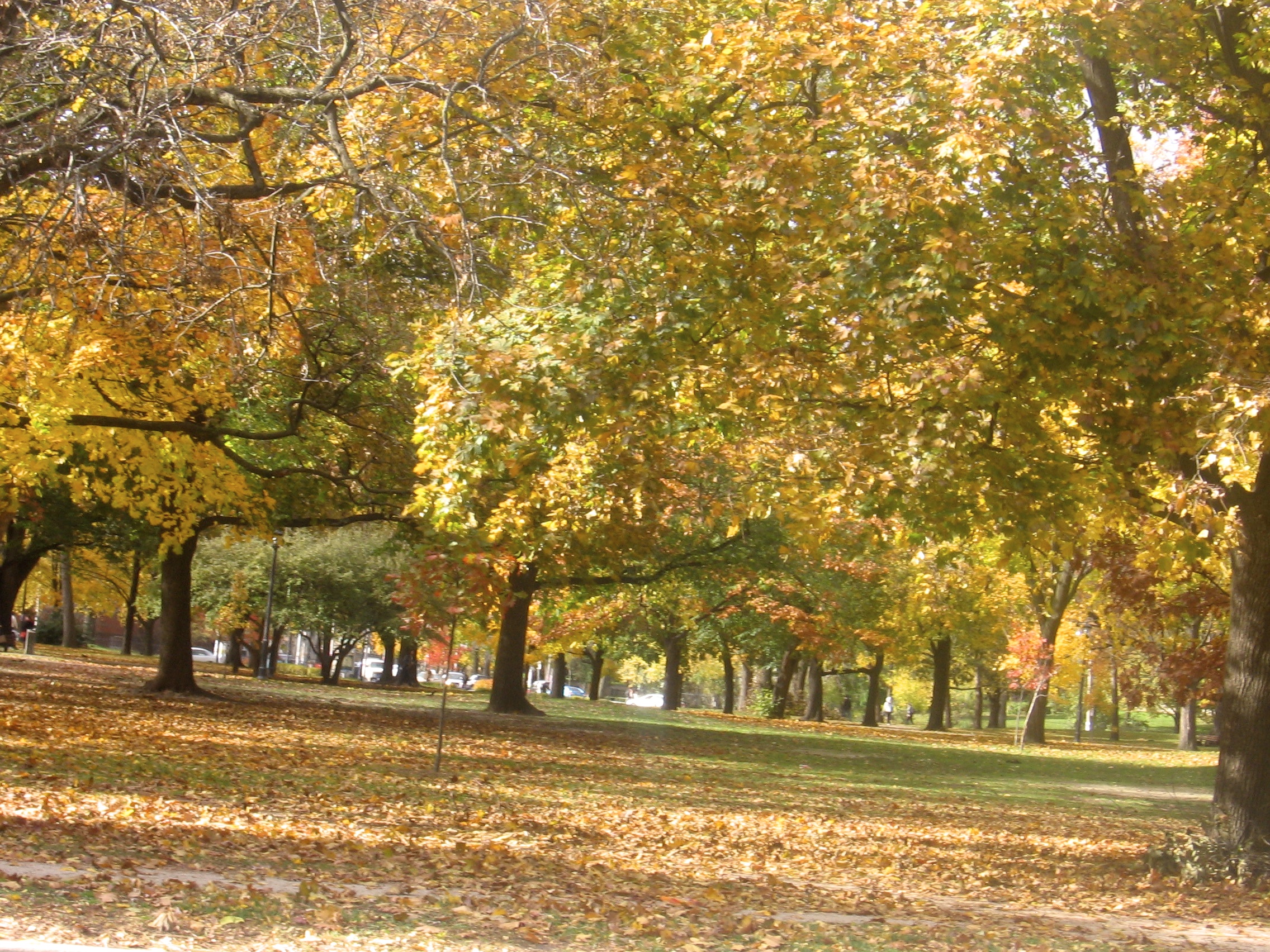
 Queens Park, Toronto

Change can be beautiful (Queens Park,Toronto)

There are things that define each of us. For some, if a day or a week goes by without going to the gym or exercising in some way, feelings of lethargy and sadness set in. For others, time outdoors is needed to feel whole. For others still, without time to cook and prepare amazing food, it is difficult to stay sane. We all have things that we gravitate towards.

For me, it has always been words, and reading in particular, that makes me feel fully alive, myself and content. Perhaps because writing and reading bring me so much joy though, they have always seemed like unproductive habits that ought to be replaced by a more useful, more diverse set of activities. In recent months, I’ve been trying to read less, to stop writing, and try and focus on other things.

And without really intending to (Arabic course +Ramadan), for the past two months, I haven’t read or properly written either.

Among many other lessons, that time taught me that you can’t change who you are. That there is a reason why the thing that you are most passionate about is referred to as a calling. That thing, that strange, terrifying thing calls out to you insistently until you respond or until it weakens and fades away, so buried by other responsibilites and commitments that you can no longer hear that reminder. Until you do respond, you are perhaps not quite your fullest expression of yourself.

Those two months taught me that while there are lots of things I’d like to explore and learn about, and many good habits to add to my life, I stil have to nourish that which is core.

I mention all of this partly as a reminder to myself to keep up with this blog, but also as a context for this post.  A couple of days ago I read a book called “The Smart One” by Jennifer Close, and like the past couple of months, the book was a reminder that while we change and develop throughout our lives, there is so much of our personality and who we are that is intrinsic. Below are a few reflections from the read.

1) Everyone has their own struggles, their own challenges

The book details the journey of two sisters named Martha and Claire, their younger brother Max (and his girlfriend Cleo), and their mother. You learn about their challenges and struggles from their own perspective, and are privy to each character making assumptions about the other members of their family. The changing perspectives and multiple narrators make you realize that there is no character that has things ‘easier’ than the others. Each character simply has their own (different) challenges, and is struggling and succeeding in their own unique way.

2) Being a parent isn’t easy

As you observe how the mother in the novel worries about her children as they strive to gain more clarity in their life, you empathize with her emotions.  You realise how difficult their transition is for her, and how much she wants stability and goodness for her kids. Rather than feeling frustrated as she worries about their whereabouts and activities, she can understand where she is coming from:

“She wanted to tell them that it would never go away, that feeling, that worry that your child was going to be okay, but she was pretty sure that they were figuring that out already. They’d have to watch Nina start walking, watch her walk up the stairs, sure that she was going to tumble down. They’d have to take her to school, pray that she made friends, hope that no other little kids were mean to her. They’d watch her get in fights, get left out, get cut from a sports team, not get into the college that she wanted. They had so much heartbreak ahead of them. (p.330)

3)  There is no excuse for rudeness.

As you empathize, the book calls on you to check your own personal behaviour. This novel is a story of adult children coming back to live in their childhood home, and the transitions described are challenging for all characters involved. When there are outbursts in the book, you can see the impact of an argument on multiple individuals, and it reminds you to be more careful with your words in your actual life.

“Claire grabbed her bag and walked outside, although she didn’t really know where she was going. She hated the way that she acted here. As soon as she stepped on the sidewalk, she felt guilty. What a brat she was. They’d let her come back and stay with them, and she couldn’t even stand to listen to their suggestions. Why was she like this? The worst part was that she couldn’t help it. The anger seemed to come out of her before she even knew what was happening. (p.285)

4) You are responsible for your life.

Through the juxtaposition of different characters, the book reminds you to be accountable to your goals and vision for your life. It reminds you that baby steps towards goals should be clear progressive steps towards things you want to learn. It is a reminder to be gentle with yourself, but also not to allow yourself to settle into complacency. Routines where you aren’t growing and where you are too comfortable are just as risky as being overly optimistic.

The novel opens with both the eldest sister, Martha realising that she has been working as a manager at JCrew for six years (she is now nearly 31) after she had a emotional breakdown as a new nursing grad, and that she hasn’t taken steps towards re-entering the health care profession since then. Within the same opening section, the second sister Claire is struggling with credit card debt in Manhattan, but reluctant to make a needed change to get it under control. Shortly after the novel opens Claire realises that she needs assistance and moves back home, and the path of these two characters is a reminder that regardless of where you are presently, the important thing is having a broader perspective of where you are trying to go and the kind of person you are trying to become.

5) Urban love stories are real

She was so happy to be back in New York that sometimes she’d be walking down the street and she’d get a rise in her chest and a giddiness that bubbled out of her throat. It made her smile at strangers. She couldn’t help it. These strange surges of happiness seemed to come out of  nowhere. Even if she’d wanted to stop herself from bouncing up and down and smiling, she didn’t think she’d have been able to. “(335)

Though the passage above refers to New York, it could apply to any city that is beloved. It is a reminder that while it is the people in a city that makes it special, it is also the energy and buzz of the city itself. You can love a city for its buildings, for its design, for its walkable spaces. You can love it for its transit system, for its cafes. You can love a city even before you build a network of people you love within it.

6) Family is a gift

“And she did miss them of course. As soon as she left, she missed them all, more than she had before she moved back. It was like she felt their absence more now. That was the worst part about leaving home – no matter what, it always felt a little sad. (p.334)

Finally, this book was a reminder that family is a blessing. That transitions and change can be challenging, but that the time we have with the people who have known us the most, and the places that we have lived the longest are special.

On Reading “In the Footsteps of the Prophet” by Tariq Ramadan

Beauty.

Beauty.

As I mentioned in my last post, over the past several days, I’ve been reading Tariq Ramadan’s book “In the Footsteps of the Prophet, a biography of the Prophet Muhammad (peace and blessings be upon him) that seeks to highlight lessons and points of reflection from his life and mission for the contemporary reader. It is a book that needs to be experienced for oneself, but below are a few reflections on lessons I gained from the read.

Continue reading

The Last Gift By Abdul Razak Gurnah

London, 2010.

One of the joys of reading is finding a piece of yourself in the pages of a book and feeling like the world is a bit smaller because someone has understood and put into words the way you feel.  Recently I read Abdul Razak Gurnah’s book “The Last Gift” and it was a read that was packed with such moments.

The book is about a couple named Abbas and Maryam who have been married for  thirty years and their two children Jamal and Anna. Jamal is doing his PhD in migration, Maryam is frustrated and uncertain about her long term relationship and the four of them are a family who know little about each other’s lives. When Abbas suffers from a diabetic crisis and a stroke at the beginning of the book however, the stories and secrets of their family begin to emerge.

More than simply an interesting novel, it is a fascinating and thoughtful read that addresses themes of identity, immigration, belonging, family, relationships, duty and love. Though we may not have deep secrets we’ve all had that feeling of realising that there is much we don’t know about those we love, and in its juxtaposition of a family oblivious to the thoughts and history of one another, and observations about what it means to belong and to feel foreign in a place more generally, this book makes you think deeply about how you define the word home, and the cruelty and harshness we often show to those we care about the most.

In addition to asking its reader to think about what it means to be a family, it asks the reader to think about the privilege in our own lives. It points out the conversations we may enter not considering the assumptions we are making about the lives of others or the privilege involved when we expect others to answer our very personal questions.

Below, some of my favourite, most memorable passages from the book.

On Learning

There was a library, with hundreds of books that he could take home to read if he wished. It was like all his schooling, until then had taken place in a small room, a small empty shut away room. Then someone had opened the door and he found out that the room was a tiny little cell in a huge building. (p.128)

On Knowledge and Adulthood..

He felt that he was at an important moment in his life although he was not sure of the source of this feeling. Perhaps it was a sense of impeding decisions, that for the first time in his life he would be able to choose what he would do with himself. He considered this and decided that he did not think it was that. Perhaps it was to do with approaching the end of his PhD, a sense of completing a job and it was this which made him feel grown up, an adult, an agent in the world. He did feel that sense but that was a plodder’s delight, satisfaction at (nearly) getting a job done, not any expectation of having arived at transforming knowledge. (p.85)

On epistemologies..

It was what he studied, migration trends and policies in the European Union. He could describe the patterns and provide the historical context, locate this wave from the Maghreb and its destination and that one from Zimbabwe and how it dispersed. He could construct tables and draw graphs, yet he knew that each one of those dots on his chart had a story that the graphs could not illustrate. He knew that from his Ba, and he knew that from the faces that he saw in the streets, and from the silent spaces in the reports he read. He knew that it was a clutter of ambition and fear and desperation and incomprehension that brought people so far and enabled them to put up with so much. (p.86)

On Stereotypes and Privilege

“They were all looking at her, waiting for her to speak, to tell them what her real nation was. She wished she could get up and leave, and walk quickly to the train station and travel to wherever her real nation was. She wished she had more panache, and knew how to charm people she did not like.” (p.116)

On War and Citizenship..

“They took no notice of those who marched, or of others who didn’t march but raised their objections in other ways, and went right ahead with their war. It made Jamal wonder what it meant to be a citizen: how millions of them listened to what they were told, and thought about it and were not persuaded, how so many people, all over the world, spoke their reluctance and outrage and disagreement, and yet how all of this made no difference. ” (p.126)

Reading Status Anxiety by Alain de Botton

In the last year of my undergrad I took a number of English courses, and these classes taught me the importance of reading carefully. We read slowly, examining structure, noticing varied sentence length, admiring literary devices, researching the origin of epigraphs and learning the details of plot advancement. As someone who is often impatient to get to the end of a book, it was startling to discover how much is hidden in the art of telling a story. I learnt the words we choose matter, and the more you know about the milieu a book is set in, the challenges and debates it is responding to, the life and history of the author, and the connections that exist between one book and other works, the better your understanding of that particular book will be. The more closely you read, the deeper and more meaningful your encounter with a text.

Like those masterful English professors, Alain de Botton is an author who changes the way you understand the world.  He reads closely, and the results of his scrutiny are thought-provoking and meaningful.

Last week I read his book Status Anxiety, a book about modern life’s obsession with status. (Note: the examples and discussions are largely limited to the West). The book is divided into two sections – the cause of status anxiety (with chapters devoted to each suggested cause of snobbery, dependence etc). In this section he suggests a possible origin for status anxiety:

“A sharp decline in the actual deprivation may, paradoxically have been accompanied by an ongoing and even escalating sense or fear of deprivation. Blessed with riches and possibilities far beyond anything imagined by ancestors who tilled the unpredictable soil of medieval Europe, modern populations have nonetheless shown a remarkable capacity to feel that neither who they are nor what they have is quite enough.”(p.25)

The second section is called Solutions and has separate chapters on Philosophy, Art, Politics, and Religion. As a whole, the book is a reminder of how fleeting worldly status is, and through an exploration of classic literature, paintings, satire, western philosophy and tragedy, explains how different philosophers, artists and writers have sought to delink the association between the value of a person and their material worldly position.

It’s a wonderful read, particularly because the examples used are so interesting and familiar, and his insights are thoughtful.  He talks about the novel Middlemarch and how although Dorothea Brooke is a ‘failure’ by society’s standards,her soul is rich, and she is of one those ‘unvisited tombs’ who makes life better for those around them. In his discussion of another classic heroine, Fanny Price of Mansfield Park,  he describes Jane Austen’s intellectual project in all her books as an attempt to reform society and alter the lenses through which we view people. In Mansfield Park, Austen creates the character of Fanny Price, an obscure and poor individual who lacks worldly importance, and who cannot forgive and/or respect the Bertrams for their materialism, moral depravity and hypocrisy. Their wealth makes them ridiculous, it has no connection to making them subjects of respect. Fanny’s vision is clear and perceptive and when we see the world through her eyes, de Botton argues, we are more likely to view our own world through a clearer lens.

When explaining Greek tragedy, the author describes tragedy as a genre that expands our capacity to emphasize with how ordinary people can fall when confronted with specific circumstances. He notes that tragedies enable use to see people with nuance and complexity – unlike the media headlines that limit what we can learn and know about a person. To illustrate this point, he gives the example of the classic novel Madame Bovary. The novel was based on a newspaper article about a 27 year old French woman who killed herself after leaving her family and feeling stifled by her marriage.

For me, one of the most powerful parts of the books is its analysis of wealth. The author points out that

” Being truly wealthy.. does not require many things; rather it requires having what one longs for. Wealth is not an absolute. It is relative to desire. Every time we yearn for something we cannot afford, we grow poorer, whatever our resources. And everytime we feel satisfied with what we have, we can be counted as rich, whatever little we may actually possess. There are two ways to make a man richer reasoned Rousseau: give him more money or curb his desires.” (p.43)

He furthers this point by saying that we decide whether what we possess is enough by comparing ourselves to a referent group of people who we consider to be our peers. If we feel differences between us and our peers we feel diminished, but if the comparison shows us that we are equivalent or slightly better, then we don’t feel so bad, even though our actual situation in either case may be precisely the same.

More importantly, praise that is not deserved does not change who we are:

“Does what is praised become better? Does an emerald become worse if it isn’t praised? And what of gold, ivory, a flower or a little plant? Marcus aimed to take his bearings from the person he knew himself to be: “Will any man despise me? Let him see to it. But I will see to it that I may not be found doing or saying anything that deserves to be despised.” (p.114)

“Rather than allow every instance of opposition or neglect to wound us, we are invited by the philosophers first to examine the justice of other’s behaviour.  Only that which is both damning and true should be permitted to shatter our esteem. We should forever forswear the masochistic process wherein we seek another’s approval before we have even asked ourselves whether that person deserves to be  listened to – the process, that is, whereby we seek the love of those for whom, as we discover upon study, their minds we have scant respect.” (p.117).

There is much more to be said as this is a very rich, wonderful text, but in summary, this book made me think about whether we have space to have conversations about anxiety, fear in modern cities. Much of this book is about how anxiety over status and social positioning has increased as modern life has become less hierarchical and more secular, and that arguably, something has been lost in the process. How do we create communities which are healthy for the mind, soul and heart, and where we can see the world in ways that separate material positioning from personal worth? This is perhaps a question de Botton answers in his newest book: Religion for Atheists, but I’m curious to hear the thoughts of others.

Additional resources:

The TED Talk about the book:

The Main Battlefield of Good

There are always those who take it upon themselves to defend God, as if Ultimate Reality, as if the sustaining frame of existence, were something weak and helpless. These people walk by a widow deformed by leprosy begging for a few paise, walk by children dressed in rags living in the street, and they think, “Business as usual.” But if they perceive a slight against God, it is a different story. Their faces go red, their chests heave mightily, they sputter angry words. The degree of their indignation is astonishing. Their resolve is frightening.

These people fail to realize that it is on the inside that God must be defended, not on the outside. They should direct their anger at themselves. For evil in the open is but evil from within that has been let out. The main battlefield for good is not the open ground of the public arena but the small clearing of each heart. Meanwhile, the lot of widows and homeless children is very hard, and it is to their defence, not God’s that the self righteous should rush.

To me, religion is about our dignity, not our depravity.

~Yann Martel, Life of Pi, p.70-71.

Celebrating Four Years as an Aunt

Being an aunt is something that is very close to my heart, and though we’re in different provinces at present, I’m celebrating the birthday of my nephew today. Sharing stories over pancake and berries breakfasts, whispering at 4 am during weekend sleepovers, drawing pictures and reading books together, and just generally witnessing a child develop from an infant into someone with speech, opinions, and a definite personality is a fascinating and blessed process. (At the end of this post is a list I wrote for terry.ubc.ca when my nephew turned one of the lessons I’ve learnt during his first year. The lessons are still true, so I’ve reposted them here)

He isn’t alone on the fantastic child list though. During my trip to Singapore last month, I kept running into wonderful kids who inspired me with their curiosity and intellect. I passed by a travel store one day with a giant globe at its entrance, and two siblings who were probably 9 and 11 years old were quizzing each other of their knowledge of tiny countries, and trying to map out flight routes. They were struggling to find a few countries, and we struck up a conversation. The next day I was on the MRT and a mum and her son of about ten years of age were talking about Google, what a googol is, and how that relates to what the search engine intended to do at the outset of its creation.

It reminded me of other kids I’ve met from time to time who have qualities that I wished schools and cities cultivated within all young people: voracious reading, tremendous curiosity, and an ability to figure out answers to questions that puzzle them.  Imagine what communities would look like if we planned them (and budgeting priorities) with the learning needs and experiences of the youngest members of cities in mind. Then imagine where you live at present. Though some places are better than others, there is still so so much that we need to do.

Life Lessons From A One Year Old 

1) Disappointments are to be experienced intensely, mourned briefly, and then forgotten. Failure should not hinder one from trying and trying again.

2) People are fascinating. Seek them out. Be unafraid to start conversations. To smile. To wave hello to your neighbours. Make a habit of constantly expressing your delight that you are in the company of others, and the recipient of their attention.

3) Relish solitude. You need time every day to wander, to think, to explore and simply figure things out. To try new things. Protest fiercely when others encroach on this time.

4) Make amends quickly. When you keep others up at night or leave them exhausted during the day, make sure you make up for it with a contrite smile and a heart softening cuddle.  Have a sunshiny disposition that makes it impossible to remain irritated with you.

5) The world is your playground, discover it actively. In every situation, there are things to be explored and learnt, touched and tasted. Have a healthy sense of curiosity about your surroundings. Be a scientist in the world. Experiment, challenge, test, test again, revise your assumptions, store that knowledge away, and repeat this process continuously.

6) Be heard.  If you have an opinion, share it. If you aren’t understood at first, persist until you’ve conveyed your point of view. Learn new languages to speak to ever widening circles of people.

7) Seek support and comfort from those around you. When you fall and stumble, touch base to feel better, and then return to your adventure-seeking, knowledge-desiring, happy state.

8 Embrace your inner artist. Express yourself, and don’t let limitations of ability and skill deter you from enjoying colours and textures and different art forms.

9) Savour tastes and smells and textures.  Enjoy each morsel. Chew slowly. Explore new foods. Try what others are having. Chase after new experiences.

10) Wake up completely thrilled about the day ahead. Stand up, laugh, and become excited and energised about the big adventures that await you. Nap when needed.

11) Touch the world, and be in touch with nature.  Splash in water. Watch birds. Stop and say hello to puppies. Jump on grass. Stare at trees. Be conscious of the fact that the world is awesome, and spend some time every day marveling at its wonders. Don’t let a day go by without some time outdoors.

12) Don’t hold grudges. When someone trips over you, or makes a mistake, have a good cry, but don’t let bad experiences or moments impact your trust of others as a whole.

13) Laugh heartily. Laugh often.

14) Seek new goals constantly. Be hungry to learn and grow and develop. Be persistent. Spend lots of time with others who are more skilled than you-it creates an environment where you are naturally constantly trying to stretch and increase your abilities.

15) Assert your independence. Don’t let others do things for you too often. Push people away who prevent you from learning.

16) When you make a mess, clean it up.

17) Dance when music plays. In fact, make time for movement every day.  After spending any length of time being stationary, or eating large amounts of food, race around, climb things, and revel in your ability to move and reach and run and stand.

And lastly…be confident.  Babies have personalities. They come into the world with their own idiosyncrasies and habits and little quirks, and when you hear mothers talk about their children, they speak about the things that he/she likes and doesn’t like, prefers and doesn’t prefer, and what their habits tend to be. And yet, a year earlier, the little person didn’t exist. Obviously I’m not the first writer to reflect on the miracle of birth, but it is something to keep in mind as we strive for things and get discouraged and get disappointed at times: that perhaps the simple fact we exist, that we come into the world with such a definite sense of self, means that one must chase and seek and find meaning. We are too astonishing to not seize the day, to not make what we can of our lives and experiences, and to not reach out to others and create social change.