On Reading North and South & travelling to 1850s England

I read Elizabeth Gaskell’s book North and South this week, and between the richly detailed, sensitive characters, the dry wit, and the beauty of the novel, it was a read that was well worth the investment in time. But the book is also a testament to the social and economic structure of the world in the 1850s. Above, my audio reflections on the read.

Would love to have a broader conversation about the book, and so for those who have read it, please do share your thoughts!

Accidental Speech

“I was quite sorry when Miss Thornton came to take me to the other end of the room, saying she was sure I should be uncomfortable at being the only lady among so many gentlemen. I had never thought about it, I was so busy listening; and the ladies were so dull, papa – oh so dull! Yet I think it was clever too. It reminded me of our old game of having each so many nouns to introduce into a sentence.’

‘What do you mean, child?’ asked Mr Hale.

‘Why, they took nouns that were signs of things which gave evidence of wealth – housekeepers, under-gardeners, extent of glass, valuable lace, diamonds, and all such things; and each one formed her speech so as to bring them all in, in the prettiest accidental manner possible.’

~ North and South, p.202 (published 1854)

On Reading “The Lowland” by Jhumpa Lahiri

Deer Lake, Burnaby, BC

Deer Lake, Burnaby, BC

“I don’t think of my books as being forms of entertainment. I don’t read books for entertainment. I read books to deepen my understanding of the human condition, and I think that condition is a very complex thing, and that people are very complex creatures…” ~Jhumpa Lahiri on The Lowland

Sixty – six years separate today from Pakistan and India’s independence. It is hard sometimes to process that fact – to understand that within the last hundred years India was a colony. That it is still reeling from centuries of colonial presence, and that for both countries, the decades since 1947 have been complicated, violent, difficult ones.  Jhumpa Lahiri’s novel “The Lowland” tells the story of two brothers Udayan and Subhash who grow up in the early days of Independence. They live near a British colonial club where they are not allowed entry, and see how for so many people, colonial power was replaced by different forms of exploitation and oppression. They are two scientists who observe what is going on, and make different assessments about how social change can occur. The novel is about family, about the relationship between siblings, parents and children, spouses, and about how one event can shape the life arc of so many people. It’s a fascinating, ambitious book, and one that is well worth the read. Once I started I couldn’t stop reading until I finished a day later, but it’s a novel that imprints itself on you. Without giving any plot spoilers (I read the book without any idea of what it was about), a few thoughts from the read.

The book is an exploration of how one event can shape the arc of so many people. Every person experiences their own trauma from injury. For some the injury is life threatening, for other characters, they manage to continue living. The wars, rebellions, deaths, protests of a nation are often described in a sentence to explain how we got to the present day, but the impact of these events is best understood by zooming up close. This novel looks at postcolonial India and the Naxalite movement by zooming up to one family.

The book is also about globalization, immigration and cultural transition. We see how ideas in one place migrate to other places without the advantage of hindsight, analysis and assessing local context, and from our own vantage point of history, we can see the consequences of this travel. We also observe how destinies and possibilities alter depending on where we live. We can become different versions of ourselves.

Unlike classic literature, this book is ambiguous.  It is not staking a moral claim about which character is  ‘right’, it is simply describing what happens to a set of characters over decades. The story is a reaction unfolding. The two brothers, Udayan and Subhash study physics and oceanography respectively, and this story is an exploration of how the choices Udayan makes impact those around him. We see how his actions have equal and opposite reactions, and unintended consequences. Subhash, an oceanographer, cultivates and studies life. He creates roots. He is careful, measured, slower moving. There are no tidy endings in this book, there are simply flawed, human characters maturing, failing, striving again, failing, continuing to exist. There are contradictions and ironies explored.

“Certain creatures laid eggs that were able to endure the dry season. Others survived by burying themselves in mud, simulating death, waiting for the return of rain.” ~The Lowland, page 1.

Like the creatures of the lowland that titles the book, the book explores how we can become fixed in certain parts of our lives. Like Subhash and Udayan’s mother, we can become struck reviewing and reliving certain moments that come to define us. Growth and survival is only possible from acceptance, moving forward and sharing, We stifle each other and suffocate when we isolate ourselves in our personal grief. This is true collectively as well, and reading this book made me think about all the different histories that exist in our countries and cities, and that our different histories are the backdrop to how we understands other conversations – conversations about assimilation and the ‘rights’ of immigrants,  conversations about the tolerance and accommodation of benevolent nations. In a multicultural nation, there is no dominant shared narrative. To understand, you need to be aware of the world.

Please Join #RainyReads November

2013 Vancouver International Writers Festival

2013 Vancouver International Writers Festival

November in Vancouver is a time of cold, grey skies and unceasing rain. It is the perfect season for reading. Last week at the Vancouver International Writers Festival however, I learnt that we’re not reading as much as we could be.  45% of Canadians do not meet the minimum literary standards. 42% of university graduates in Canada never read another book after graduation, and the average young person spends 60 hours a month in front of a screen and texts 20,000 words each month. In fact, 80% of families don’t buy books. (For most people, the speaker pointed out, Chapters/Indigo is a place to buy a yoga mat).

In a small way, I’d like to change that and read with others this November. And so, in the spirit of keeping cheery through the rainy season, I’ll be using the hashtag #rainyreads to share what I’m reading through social media and the blog. Please join me! I’d love to hear about your favourite books, books you’re reading right now, and books you turn to on days when going outside holds no appeal at all. And if you haven’t found time to read for a while now, for the month of November, try reading something you’ve been meaning to try for 15 minutes a day.  Tag your tweets with the hashtag #rainyreads (or @shaguftapasta), write on the Seriously Planning Facebook Page, and if you have reflections you’d like to share, do email seriously.planning@gmail.com.  If you’re in Vancouver, we’ll have a #rainyreads meetup over coffee at the end of the month.

Happy reading!

A Community is Made of Men and Women

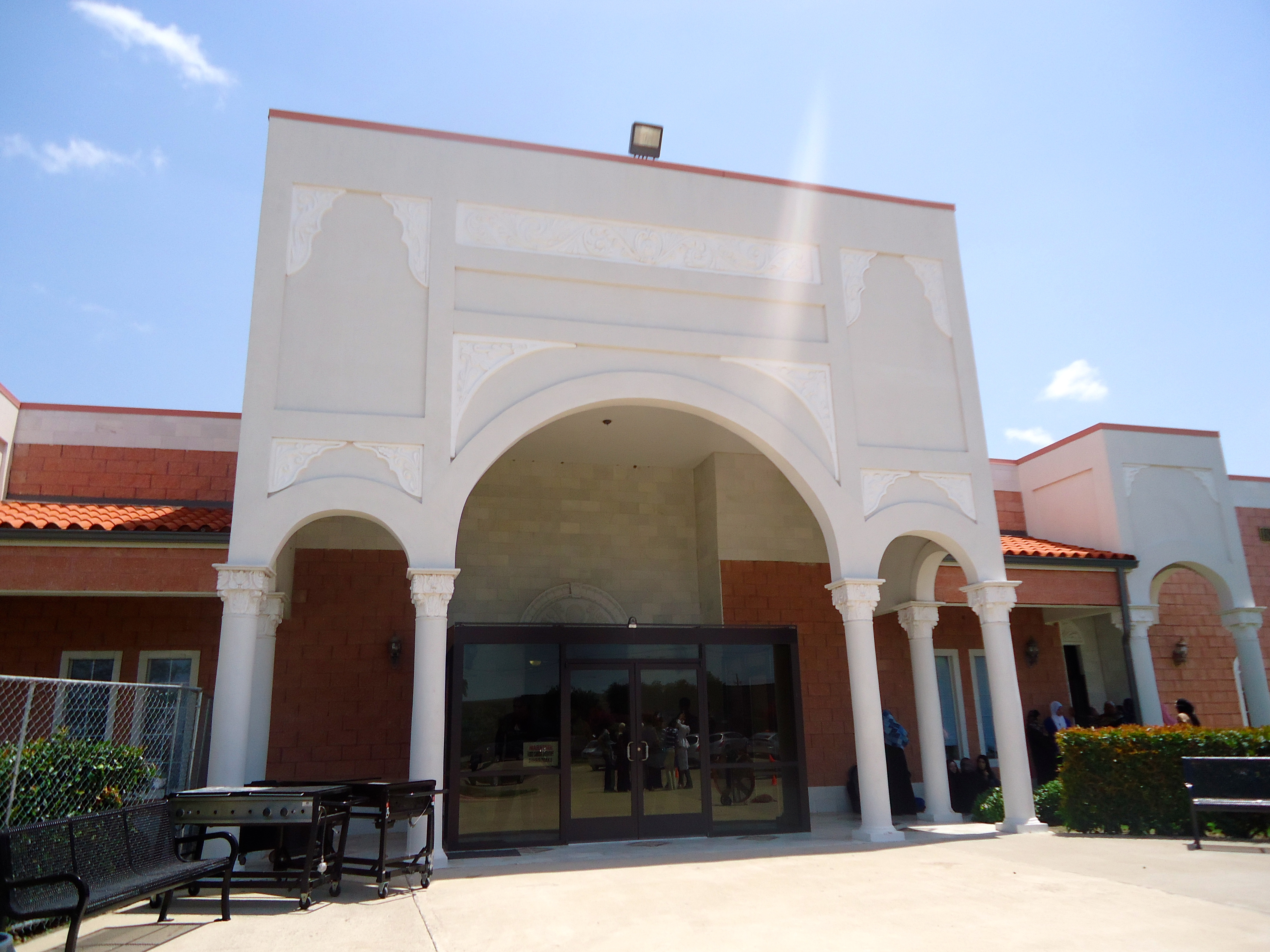
Men's prayer space/our Arabic classroom in Carrolton, Texas.

Men’s prayer space/our Arabic classroom in Carrolton, Texas.

As much as I love Vancouver, there are moments when I want to move. There are moments when I miss spaces where the educational experience of men and women is equal, such as the SeekersHub in Toronto, where I always felt welcome, and never felt like my gender was a barrier to furthering my Islamic education.  I miss interfaith prayer spaces such as the MultiFaith Centre (and other prayer spaces) at the University of Toronto that were physically beautiful, and did not barricade women in a corner.  And more recently, there are moments when I want to return to Dallas, where I spent a month in a mosque learning classical Arabic grammar this summer, and where class was held in the main prayer space, and structured in a way that men and women were on opposite sides of the room, and equally able to learn from our teacher. Aside from the learning benefits, knowing your teacher means that you can model their behaviour. From the ways a teacher interacts with you, you learn what appropriate gender interaction looks like, and can extend those principles to the rest of your life. Knowing your teacher means that you have someone to ask questions and seek advice when you are unsure what to do. It is essential.

In Vancouver however, we’re not there yet.

Two nights ago, the founder of the Bayyinah Institute (the same institute that offers the Arabic course I did in Dallas) came to Vancouver for a lecture on stories in the Qur’an. Though he wasn’t my teacher in Dallas, during one of our class days he came to help us review for an upcoming exam, and I was looking forward to a small way, reconnecting with what was a very special month of learning for me.

Unfortunately, I never heard him speak. The hall where the lecture was held was large, but the women were in a different, crowded space, with no video link. So after waiting for a bit and seeing if I could sit outside the lecture hall, my brother and I left. The teacher was surprised as well I think, and mentioned that ‘he wasn’t used to women not being in the same space, would do a Q and A session after the event with the female attendees, and would stay as long as women wanted him to stay.”

I appreciate his attempt to address an inequitable situation. But it’s not up to a guest teacher to find some way to include everyone; equity needs to be thought of at the outset of the planning process. To give an example from urban planning, when the floor plans of housing developments and community centres do not consider the needs of the multiple communities and cultures, it is a message that only the dominant culture matters. When transit users with wheelchairs experience horrendous delays, poorly lit and dangerous transit stops, and systems that do not account for their needs, those barriers of access signal that their needs are not valued. We send messages about who does and does not belong in the ways we structure spaces and places.

As long the learning experience of women is not valued, the education of women, communities and families will suffer. As long as the learning experience of women is not valued, it becomes difficult to invite friends and colleagues who may be interested in learning more about Islam and wish to fill in their own gaps of knowledge. As long as the learning experience of women is not valued, it sounds hollow to talk about how gender equity is something inherent to Islam.

And so, rather than running away to another city, below are a few thoughts and suggestions on how to create better spaces. These are not new ideas, but they make a real impact.

1) If you only have one space available that is large enough for all your attendees, have the men and women share that space, and set up tables that are side by side.

You can have an aisle separating both sides of the room for ease of movement. If you don’t have a classroom available and you’re in a mosque, use the men’s prayer room.  In Dallas, the women’s section of the mosque was on the same floor as the men’s section with a one way mirror. During our evening classes, if anyone from the larger community wished to sit separately, they could still see into the class easily, but nobody could see them. (95% of attendees sat in the main section of the mosque though). A few years ago I was on a study trip called the Rihla, and spent a few weeks with teachers from the US and UK in Saudi Arabia. We sat on the floor in our classes, on opposite ends of the room. In Toronto there is a week long retreat held annually with incredible teachers from around the world, and again, that event happens through side by side seating, with a section in the middle of the room for families who wish to sit together.

2) If you are designing a space and you’d like a partition, make it subtle. At the SeekersHub in Toronto, one of my favourite spaces to learn, the men and women sat on opposite sides of the room, the teachers were at the front of the room, and there was a bookshelf in the middle. The room was equally divided, you could see the teacher, but the students on the other side of the room couldn’t see you. It was a beautiful set-up.

3) When you see an uninclusive space, act as an ally. It’s not up to women alone to advocate for inclusive spaces. In our family, we only go to events where I can hear and experience the event properly, and my Dad and brother are my strongest allies in bringing up issues of access. The teachers that I value most: my teacher in Dallas, my teacher at the Hub in Toronto, and other teachers I’ve learnt from in other settings, often speak out about how communities need to view the inclusion and involvement of women differently. The students I studied with at the University of Toronto were men and women who cared about equity, and if I was ever in a situation where I felt uncomfortable, there were lots of people who noticed the same dynamics and worked to address them. It is alienating to be the only person advocating for your learning.

4) Have an ongoing study of the life of the Prophet, peace and blessings be upon him. Sometimes spaces are segregated in harmful ways because we aren’t necessarily familiar with the ways women were nurtured historically in Islam. But when we study the life and character of the Prophet Muhammad (peace and blessings be upon him), the ways in which he created a community in which men and women were equally valued, and the contributions, dignity and independence of his wife Khadijah, the courage of his daughters, the beauty of other members of his family and community, it is clear that gender equity are part of the Islamic tradition. One great learning resource to learn more is the Qalam Institute’s Podcast on the Prophet’s Biography, which goes into the Prophet’s life in a lot of detail.

5) Support organizations that care about their female students. If you can’t find inclusive spaces, still continue to learn. I’ve been remiss this year in organising regular study circles with others, but this is something I hope to do in upcoming months.  SeekersGuidance is a place with wonderful online courses, the Muslim Chaplaincy at the University of Toronto publishes its lectures and classes on its SoundCloud page, and both of these resources are wonderful resources to share, support and learn from.

The Love Between Cities and People

What a joy it is to come across beautiful writing.  Everything about Instructions for a Heatwave is exquisite. The sentence structure, the lack of superfluous words, the  stunning detailed descriptions, it is all part of a beauty that leaves your heart hurting and your eyes a bit teary without quite knowing why. Below, a description from the book about the love that can exist between a person and a city.

She misses London. She misses it the way she missed Joe. A strange, cramped pain that leaves her almost unable to speak. She has never lived anywhere else until now. She hadn’t really known that people lived anywhere else, or would want to. There are days when she can hardly bear it, when she walks across the landing of the house, again and again, her arms crossed over her middle, her mind overfilled with images of descending an escalator into the Piccadily Line on a wet, darkened evening, everyone’s umbrellas slicked with rain, of the ten-minute walk between her old flat and her mother’s house, of Highbury Fields on a misty day, of the view over the city from Primrose Hill. Homesick: she’s found that it really does make you feel sick, ill, maddened by longing.

Maggie O’Farrell, Instructions for a Heatwave, p.116-117.

She Cannot Read

Words Matter.

Words Matter (London 2010)

She cannot read. This is her own private truth. Because of it, she must lead a double life: the fact of it saturates every molecule of her being, defines her to herself, always and forever, but nobody else knows. Not her friends, not her colleagues, not her family – certainly not her family. She has kept it from all of them, felt herself brimming with the secret of it her whole life. (p.76)

She cannot read. She cannot do that thing that other people find so artlessly easy: to see the arrangements of inked shapes on a page and alchemize them into meaning. She can create letters, she can form them with the nib of a pen or the lead of a pencil, but she cannot get them to line up in the right order, in a sequence that anyone else could understand. She can hold words in her head – she hoards them there – she can spin sentences, paragraphs, whole books in her mind; she can stack up words inside herself but she cannot get these words down her arm, through her fingers and out onto a page. She suspects that, as a baby, she crossed paths with a sorcerer who was in a bad mood that day and, on seeing her, on passing her pram, decided to suck this magical ability from her, to leave her cast out, washed up on the shores of illiteracy and ignorance, cursed forever. (p. 80)

The passages above are from a book called Instructions for a Heatwave, and refer to a character named Aoife who never learnt to read at school. Letters jump at her when she looks at a page, and after years of frustration, she leaves school without completing any of her subjects, and unable to read simple texts. When we meet her, she is working as a photographer’s assistant in America. While at work, whenever she receives a contract or any other document she must process, she puts the pieces of paper in a blue file folder. By now, the file is overflowing with things that need attending.

Because she cannot read the labels on the boxes of equipment in the studio, she memorises the location of every tiny item in the studio so that nobody guesses her secret. I don’t know what happens to Aoife as I’m not done the book, but I can sympathize with her. I have (like many other readers I’m sure) had the experience of travelling and being unable to read the local language. Such moments can leave you feeling diminished, unintelligent, and embarrassed. They can impact how you feel about yourself.  You can become reluctant to speak for fear of making grammatical mistakes, and overwhelmed figuring out key things such as where you are, and how the transit system operates.  Struggling with basics means it is harder to tackle more complicated topics such as learning about current events and debates with different levels of government.

If the experience of being unable to understand your local environment is frustrating even in short term doses, it is difficult to imagine how frustrating that must be if that is your long term reality.  And in fact, even at home, there are so many people who struggle with low literacy every day.

In Canada, “four of ten adult Canadians, age 16 to 65 – representing 9 million Canadians – struggle with low literacy. They fall below level 3 (high school completion) on the prose literacy scale.” 27% of those 9 million Canadians struggle with simple reading tasks. (ABC Life Literacy Canada). This has multiple social impacts, from employment prospects to health impacts to civic engagement.

I currently work with a nonprofit that supports social programs in the city, and seeks to (among other goals) target the root causes of poverty in order to create systemic sustainable change. Thinking about illiteracy this evening though, I can’t help thinking that while there are important contributions to make on a systemic level, we cannot lose sight of the contributions that are needed on an individual basis as well. There are organisations that need tutors, there are libraries that need books, there are people who need someone to help them gain the confidence to read out loud and to practice their writing.

There is so much to do! My last post was about loving words, today, I am realising that each love, each gift that one is given necessitates sharing, and serving others in a way that is of benefit.

On Reading “The Smart One” by Jennifer Close

 Queens Park, Toronto

Change can be beautiful (Queens Park,Toronto)

There are things that define each of us. For some, if a day or a week goes by without going to the gym or exercising in some way, feelings of lethargy and sadness set in. For others, time outdoors is needed to feel whole. For others still, without time to cook and prepare amazing food, it is difficult to stay sane. We all have things that we gravitate towards.

For me, it has always been words, and reading in particular, that makes me feel fully alive, myself and content. Perhaps because writing and reading bring me so much joy though, they have always seemed like unproductive habits that ought to be replaced by a more useful, more diverse set of activities. In recent months, I’ve been trying to read less, to stop writing, and try and focus on other things.

And without really intending to (Arabic course +Ramadan), for the past two months, I haven’t read or properly written either.

Among many other lessons, that time taught me that you can’t change who you are. That there is a reason why the thing that you are most passionate about is referred to as a calling. That thing, that strange, terrifying thing calls out to you insistently until you respond or until it weakens and fades away, so buried by other responsibilites and commitments that you can no longer hear that reminder. Until you do respond, you are perhaps not quite your fullest expression of yourself.

Those two months taught me that while there are lots of things I’d like to explore and learn about, and many good habits to add to my life, I stil have to nourish that which is core.

I mention all of this partly as a reminder to myself to keep up with this blog, but also as a context for this post.  A couple of days ago I read a book called “The Smart One” by Jennifer Close, and like the past couple of months, the book was a reminder that while we change and develop throughout our lives, there is so much of our personality and who we are that is intrinsic. Below are a few reflections from the read.

1) Everyone has their own struggles, their own challenges

The book details the journey of two sisters named Martha and Claire, their younger brother Max (and his girlfriend Cleo), and their mother. You learn about their challenges and struggles from their own perspective, and are privy to each character making assumptions about the other members of their family. The changing perspectives and multiple narrators make you realize that there is no character that has things ‘easier’ than the others. Each character simply has their own (different) challenges, and is struggling and succeeding in their own unique way.

2) Being a parent isn’t easy

As you observe how the mother in the novel worries about her children as they strive to gain more clarity in their life, you empathize with her emotions.  You realise how difficult their transition is for her, and how much she wants stability and goodness for her kids. Rather than feeling frustrated as she worries about their whereabouts and activities, she can understand where she is coming from:

“She wanted to tell them that it would never go away, that feeling, that worry that your child was going to be okay, but she was pretty sure that they were figuring that out already. They’d have to watch Nina start walking, watch her walk up the stairs, sure that she was going to tumble down. They’d have to take her to school, pray that she made friends, hope that no other little kids were mean to her. They’d watch her get in fights, get left out, get cut from a sports team, not get into the college that she wanted. They had so much heartbreak ahead of them. (p.330)

3)  There is no excuse for rudeness.

As you empathize, the book calls on you to check your own personal behaviour. This novel is a story of adult children coming back to live in their childhood home, and the transitions described are challenging for all characters involved. When there are outbursts in the book, you can see the impact of an argument on multiple individuals, and it reminds you to be more careful with your words in your actual life.

“Claire grabbed her bag and walked outside, although she didn’t really know where she was going. She hated the way that she acted here. As soon as she stepped on the sidewalk, she felt guilty. What a brat she was. They’d let her come back and stay with them, and she couldn’t even stand to listen to their suggestions. Why was she like this? The worst part was that she couldn’t help it. The anger seemed to come out of her before she even knew what was happening. (p.285)

4) You are responsible for your life.

Through the juxtaposition of different characters, the book reminds you to be accountable to your goals and vision for your life. It reminds you that baby steps towards goals should be clear progressive steps towards things you want to learn. It is a reminder to be gentle with yourself, but also not to allow yourself to settle into complacency. Routines where you aren’t growing and where you are too comfortable are just as risky as being overly optimistic.

The novel opens with both the eldest sister, Martha realising that she has been working as a manager at JCrew for six years (she is now nearly 31) after she had a emotional breakdown as a new nursing grad, and that she hasn’t taken steps towards re-entering the health care profession since then. Within the same opening section, the second sister Claire is struggling with credit card debt in Manhattan, but reluctant to make a needed change to get it under control. Shortly after the novel opens Claire realises that she needs assistance and moves back home, and the path of these two characters is a reminder that regardless of where you are presently, the important thing is having a broader perspective of where you are trying to go and the kind of person you are trying to become.

5) Urban love stories are real

She was so happy to be back in New York that sometimes she’d be walking down the street and she’d get a rise in her chest and a giddiness that bubbled out of her throat. It made her smile at strangers. She couldn’t help it. These strange surges of happiness seemed to come out of  nowhere. Even if she’d wanted to stop herself from bouncing up and down and smiling, she didn’t think she’d have been able to. “(335)

Though the passage above refers to New York, it could apply to any city that is beloved. It is a reminder that while it is the people in a city that makes it special, it is also the energy and buzz of the city itself. You can love a city for its buildings, for its design, for its walkable spaces. You can love it for its transit system, for its cafes. You can love a city even before you build a network of people you love within it.

6) Family is a gift

“And she did miss them of course. As soon as she left, she missed them all, more than she had before she moved back. It was like she felt their absence more now. That was the worst part about leaving home – no matter what, it always felt a little sad. (p.334)

Finally, this book was a reminder that family is a blessing. That transitions and change can be challenging, but that the time we have with the people who have known us the most, and the places that we have lived the longest are special.

Take Aways from the National Council of Canadian Muslims Vancouver Leadership Training

Science World, Vancouver BC

Ramadan is a time of re-centering oneself, of getting re-energised spiritually so you have the capacity to create change with yourself and the world beyond during the rest of the year. Yesterday, as I spent some time reflecting on the things I want to work on in the next several months, I came across my notes from a day-long leadership and media relations course the National Council of Canadian Muslims (at that time known as CAIR-CAN ) did in Vancouver called Rise to the Challenge in February 2013. There was much I took away from the day, and I thought I’d share some thoughts and key points here.

Firstly, the training was a reminder that there is so much work that needs to be done in Canada to protect our civil liberties and human rights. As we discussed security certificates, changes to laws that are alarming from a civil liberties perspective, incidents of Islamophobia and much more, we were reminded that apathy and inaction is not an option. It is not enough to simply passively consume news, one must develop the knowledge and skills needed to engage productively in conversations occuring in the public sphere.

And on a personal note, I was surprised to learn during training about the frequency of conflicts in Canada around the development of mosques. Emphasizing that point, the day of the course there was a talk in scheduled in Ottawa by a planning lawyer who had written a book about how to use planning legislation to stop your local mosque from getting planning approval. My Masters research at the University of Toronto was about deconstructing racist and Islamophobic discourse that surrounds the development of mosques, and this course was a reminder that though my project is over, stereotypes about mosques are being continually produced. For me, this means that I need to keep working in this area of research and make practical contributions.

Below, some of my take-aways from the training.

1)  Know yourself. Take inventory of your strengths and weaknesses and know what you need to work on, and how you can best contribute.

2) Know your challenger. Be prepared to counter Islamophobia. Knowledge = power.

3) Remember the words of our green teacher: “No! Try not! Do or do not! There is no try!” ~Yoda.

4) From an Islamic standpoint, when doing a task, any knowledge required to do that task is obligatory.

5) Important to act with justice. If asking others for fair treatment of Muslims, need to extend treatment to others.

6)Important to have tawakkul (reliance on Allah). You have to pray, but you have to tie your camel as well.

7) In 1997, the Runnymede Trust (in the UK) defined Islamophobia. In part, Islamophobia is when Islam and Muslims are seen as hermetically sealed, separate, not able to borrow from other traditions and contributions of others. Other components of that definition of Islamophobia are detailed by the Runnymede Trust.

8) Often you’ll see statements made that are thinly veiled Islamophoba, where someone will say: “Not all Muslims are like this, but…” (and then proceed with an Islamophobic statement)

9) Also will see that many people reject criticisms of liberalism and modernity that come from Muslims. We’re in a moment at present when Islamophobia is almost deemed to be normal, natural, and unproblematic. Often subtle and coded and taken for granted as part of normal discourse.

10) Islamophobia can be physical assault and/or verbal assault which has emotional and psychological impacts.

11) Events in the US have Canadian implications.  US-CAN border is very porous, and along with the flow of goods, ideas and concepts flow as well. There is a cross pollination of ideas in public discourse.

12) Often see Islamophobia in certain messages: Examples of this include:

  • Where are the moderate Muslims?
  • Muslims are embracing a victim mentality
  • Stealth jihad -Muslims are building a mosque!
  • Attempts to label a group as foreign

Reminders:

1) Be hopeful! Some of the sahabas (Companions of the Prophet, peace and blessings be upon him) who were initially most vociferous opponents of Islam became its most staunch supporters

2) Important to develop good media relations skills and recognise that your faith calls you to care about issues that extend beyond yourself. Islam calls Muslims to speak out against many forms of injustice. On animal rights. On issues related to other religious communities. Have in the Islamic tradition stories of Prophets caring about the wellbeing of ants.

3) Have patience. There are examples in the seerah (life of the Prophet, peace and blessings be upon him) of the Prophet (peace and blessings be upon him) standing up to speak to his community, and his uncle mocking him. And the Prophet (peace and blessings be upon him) didn’t say anything. He was the most eloquent of people, he had the best speech, and he understood Islam the most, and yet he didn’t say anything. So there are times when it is better to stay silent and not react. We too often have a knee – jerk reaction.

4. Don’t forget about humour and satire. There are great examples of this being used. (The MyJihad hashtag for example, the MuslimRage hashtag). Something that should be explored more often.

5. Build coalitions. Valuable to engage in coalition building when there is an issue that intersects with many different groups. When we stand up for rights of someone else, we stand up for our collective rights. We need to stand up for rights that matter to all of us as Canadians.

6. Need to be aware of all the media in your neighbourhood. Don’t be a media spokesperson who never follows the news.

7. Have a communications plan. Be prepared. If disaster strikes, no time to prepare a communications strategy then.

Don’t:

1) Forget to get back to people
2) Avoid the issues. That’s failing to respond when response is warranted.
3) If you’re not a scholar, don’t be a scholar. Be a citizen.

Take home point:. Have to reclaim your narrative. If you don’t tell your story, someone else will. You need to write your book. You need to write your articles, your blog posts.

Resources

  1. Fear Inc by Wajahat Ali
  2. Gallup Study: Who Speaks for Islam: What a Billion Muslims Really Think
  3. Myth of the Muslim Tide by Doug Saunders
  4. Hope and Despair by Mona Mazigh
  5. Tower of Babble by Richard Stursberg
  6. The Media Gaze: Representations of Diversities in Canada by Augie Fleras

(Day 3) Ramadan is the Month of Qur’an

The beauty of mosques (Dallas, Texas)

Grammar helps you take a word for word translation and make sense of it. For instance, the word al-Kitab is a written text. The word Qur’an means that which is recited abundantly, is read frequently. In the Qur’an we see that different pointing words are paired with these two words – this Qur’an, and that Kitab. And this makes sense. At any time our written text is in a fixed place, in our bookbag, our iPad, in our car. It’s possible that we will be far away from our written copy of the text (otherwise known as the mushaf).  But that which is read and recited, the Qur’an that is in the heart, that is always near, and we see that reflected in the pointing words used with these different words.

When we take a closer look we also notice the first place the word al-Quran is mentioned from the beginning of the Quran is in the verse about Ramadan. Before that the word that is used is al-Kitab. Because in Ramadan we recite Quran, abundantly, more than it is recited in the whole year. And so the first time we are introduced to this word is in this verse.

-Shaykh Abdul Nasir Jangda, Bayyinah Quran Intensive 2013

Today (Friday) is the third fast of Ramadan, the Muslim month of fasting, in which Muslims worldwide fast from before sunrise to sunset for 30 days. It’s a month of reflection, prayer, personal transformation, charity and empathy, and a time that is much anticipated before it arrives. This year, there are two aspects of Ramadan I’ve been thinking about over the last couple of days.

1) Ramadan is a universally accessible experience.

For the past month I’ve been studying classical Arabic grammar in Dallas, Texas, and I returned to Vancouver the day before Ramadan began. The course was my first trip to the States, and over the month I learnt so much about mosques, the beauty of faith, Arabic grammar, the state of my own heart, and so much more. When it was possible, I tweeted reflections from our classes, and through messages and tweets I received that month, I realised that there were people across the United States and other parts of the world who were following our classes, and very much wished to be with us. Being part of such an incredible learning opportunity was a tremendous blessing and gift.

In contrast to that experience of traveling for a specific class, or other religious experiences such as the pilgrimage of Hajj or Umrah, it’s beautiful how Ramadan is something that is available to everyone. Regardless of time limitations or finances, everyone can, and is meant to change their routine, reflect on what they are doing, where they are going, and how they are personally striving to become better people.  It is a gift that we don’t travel anywhere to experience Ramadan, it is just there waiting for us, and I hope I can take advantage of this month and make the most of it.

2) Ramadan asks us to figure out how you fit spirituality in your daily life

At the Arabic course I was taking, we had class from 8-3pm everyday, and then returned back to the mosque from 7-11pm for additional classes and reflection time. It was beautiful to have that window away from my daily life and to take time everyday to study, read Qur’an, pray with others and make personal supplications as well. The challenge when you leave such an experience is figuring out how to maintain the spiritual habits and your relationship with the Divine you’ve started to cultivate while you were away. The challenge is translating the learning you’ve done into your character and your life. The challenge is actually becoming a better person.

Ramadan is the opposite. In the midst of one’s daily routine of commuting, going to work, preparing meals, and whatever responsibilities make up your day, you challenge yourself to fast, to set goals of developing a better character, and finding time to connect with the Qur’an, reflect on its meanings. You challenge yourself to do good works, to give in charity, and to spend ample time in personal supplication. It’s a month of practical spirituality. It’s a challenge because you are sleep and food deprived, but a critical exercise because the character development in Ramadan occurs as your life continues around you. As a result, the habits you develop in Ramadan are hopefully habits you can continue once the month is done.

During my Arabic class, I struggled with whether or not I should blog about our experiences – partly because of time constraints and partly because in recent months I’ve been trying to figure out whether writing is a beneficial way to spend my time. In the DFW airport on Monday though, I walked through bookstores eager for something for the flight, and realised I couldn’t find anything that spoke to my experiences particularly well, and had a long think on the way home about writing. This month, I’m going to God willing, try and spend some time sharing Ramadan experiences and reflecting on the course I just took – hopefully there is something here that is of benefit. Till next time.