Reading is a Community Building Exercise

Almost a year ago, I visited Toronto to see if the city and I were still in love, and whether it was time to live here again. Seriously Planning had its first in person events at that time. A few months later, I moved from the West Coast, and the months since then have been unexpected, challenging, full, educational and beautiful.

Above all, the most important “settlement agency” that has helped me with the (still ongoing!) transition has been the *very small* (but very exciting!) Seriously Planning bookclub that has met regularly over the past several months to discuss different books. Though the books have been very different from one another, at each session we’ve shared our feelings about what we’ve read, the lessons we’ve learnt from our reading, the questions each book has raised for us, and the way reading each book has altered/impacted the way we are in the world. We’ve tried to pick books that help us reflect and grow, and the experience of actively reflecting both individually and collectively on each book has been transformational. Even more importantly than the amazing books though, the people that have come to each session have become very important people in my life – this is the circle I come to when things seem confusing to me, when I feel homesick, when I’m upset that I’m not doing the transition with as much grace and tranquility as I would hope.  Whatever the challenge, the bookclub circle has been generous, wise and patient and I’m very, very grateful for its presence in my life! Would you like to join? We’re holding two events this December (details below), but if there are any additional events, the details will be posted on the Facebook page first.

For readers who aren’t in Toronto/aren’t able to meet in person, please do share! What are the books you’ve read this year that left an imprint on your heart? It’s cold and snowy in Toronto, and I’d love to make a winter reading list.

Dec 15th:Seriously Planning Book Club (December Edition)

Dec 29th: Idea Steep (Celebrating our Favourite Reads of 2014

A Fair Witnessing (Gems from Scott Korb’s Light Without Fire)


Sweetness for the mind and  heart.

Sweetness for the mind and heart. (Soma Chocolate, Toronto)

Some books call out to you to share them with others. Recently I read Scott Korb’s book Light Without Fire about the first year at Zaytuna College, America’s first Muslim liberal arts college, and ever since I finished it, I can’t stop talking about it with others.

There are so many things to appreciate and admire about this book. To begin, it is rare to encounter an author who is able to talk about Islam/Muslims with honesty and sensitivity. In Light without Fire, the author’s admiration, warmth and connection with the people he meets shines from every page, and you get the sense that he is not a journalist simply watching Zaytuna from the sidelines, but someone who participates in the life of the community. When he visits the Lighthouse Mosque in Oakland for Friday prayers for instance, he lines up shoulder to shoulder with others in prayer. When he attends the mawlids (a celebration of the Prophet, peace and blessings be upon him), at Zaytuna or in the broader community, over time he becomes familiar with the poetry and sacred music that is recited.

His curiosity and engagement makes the book a very readable, thoughtful, interesting, important read, and one that rewards its reader generously for their time and attention. It makes the book a light, a book of beautiful writing, subtle humour, and humanity, that helps the reader see and understand Zaytuna College more clearly.

“Always carry a little notebook around with you. Whatever inspires you, or rings true for you, was meant for you. So make sure you write it down.” Faced with what Faatimah called “the obvious way” that the Zaytuna classroom – or really any classroom – was not like the rest of the world, and vice versa, every moment deserved the attention of a notetaker. Though the Zaytuna classroom might be structured with the books and schedules and tests that are the trappings of any classroom, what’s “out here” is no less important, structured as it is, she said “so much more by the divine.” The whole world is the classroom. She saw in it signs and proofs of Allah.” ~ (Light without Fire, p.110)

In the spirit of this advice to be a notetaker (given by Shaykh Yahya Rhodus), below are a few thoughts from my read.

Continue reading

Look Big Picture (Life Advice from Chris Hadfield)

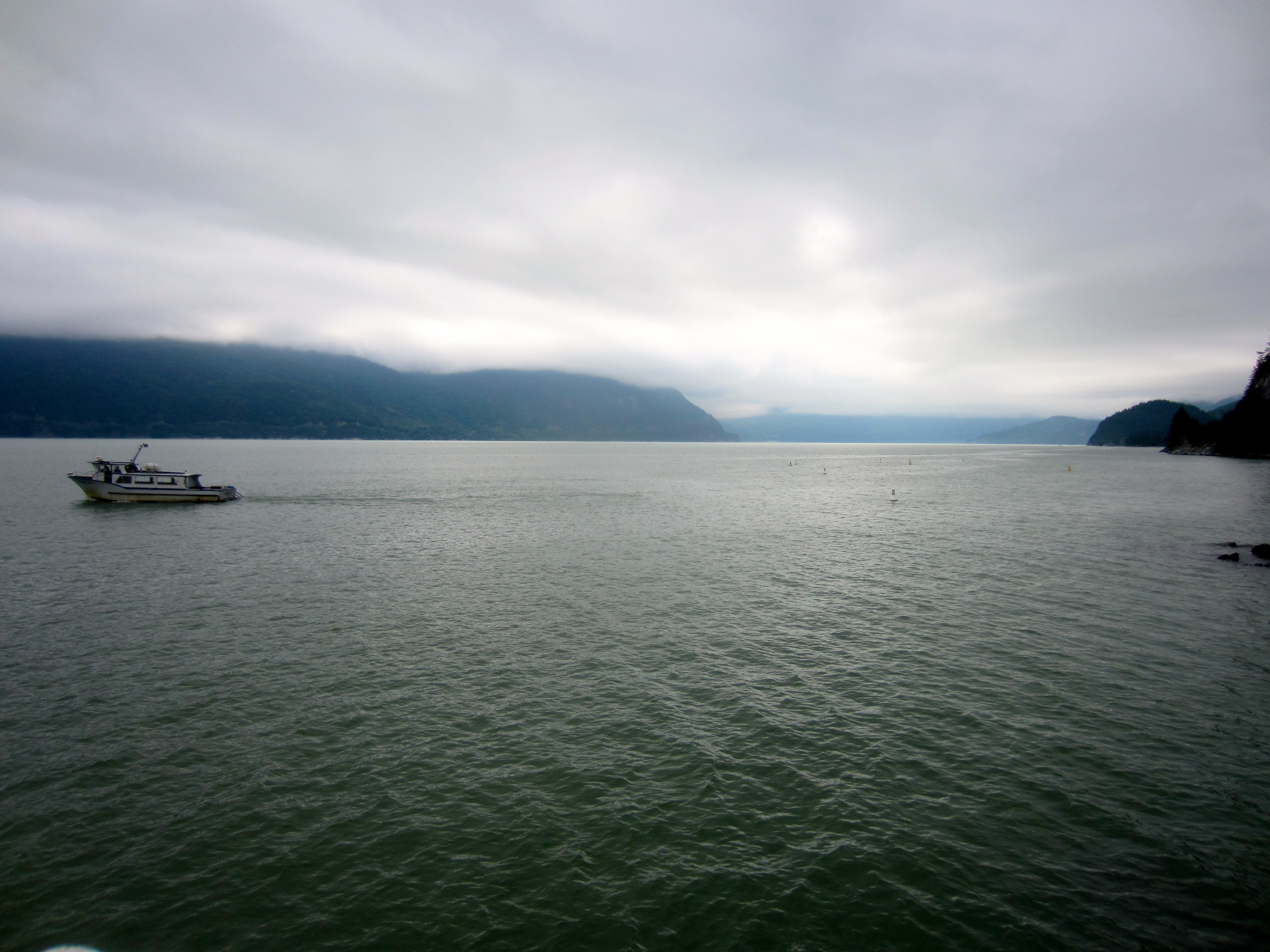
Reaching for the horizon, Porteau Cove, BC.

Reaching for the horizon, Porteau Cove, BC.

I recently saw a fantastic interview between Cmdr Chris Hadfield and Jian Ghomeshi that I highly recommend watching in its entirety.  In case this advice is helpful to others too, below are a few gems from their conversation.

Q: What is the most important lesson you think you’ve taken away from the space program?

C.H: If you look big picture, I think the important thing is to give yourself something in life that you really want to do. What is exciting? What is the thing in the distance that if things worked out, you just see yourself doing ten years from now. Or 20 years from now… And then figure out how you can just start nudging yourself along one decision at a time. And you can change directions. I’ve just changed direction. I’ve just retired after a long career. I’m picking those things now and trying to decide what skills I will need in order to head that direction with my life.

Important to remember two things:

1) Don’t have to go straight there.
2) Don’t make that thing be the measure of your self worth. Try and celebrate every little victory, every day. Come out of every day saying today was a good day. I got to do this and this and this. I liked all the stages in my career along the way. Don’t want to get my self worth wrapped up in things in the future that may never happen.

  • I feel a compulsion to make the most of myself. It’s kind of like a way of dealing with life. I sort of look at these are the various skills I’ve been given, these are the things I can do, and if I am not trying to make the most of all the various talents and capabilities I have and opportunities I have, then I am wasting my own time and wasting other people’s time to some degree. It drives me to try and not let things slip away. I really feel an urge to do something useful, to make the most of what I have.  So that drives me, that compels me, it makes me continue to work. It gives me reasons and I like it.
  • I think the real key to social media is to be honest. To tell people what it is that you saw, and what it meant to you, and why. It’s social media, it’s not marketing media. It’s not “I’m trying to sell you dishsoap”. It’s I saw this incredible thing, or this incredible thing meant this to me and here is why. And this is what it looked like.
  • I didn’t do this to become a rockstar. I did this because I found it fundamentally interesting and worthwhile and I thought everybody should be interested in it. So I pursued it doggedly for a long time. And most of the the work I’ve done has been completely uncelebrated like anyone’s work…Anyone who shines for a moment, it’s the result of all those unheralded things that it happens. It wasn’t like it was a springboard so that finally I could be famous. That wasn’t the intent. It was more the opposite.  I’m not trying to sell people something, I’m trying to share the wonder of the experience with them and I’m delighted so many people share back.
  • [story about replacing his cupboards when his house got flooded and really enjoying the experience] I feel exactly the same way about my career. It’s not like I go around now that I don’t live in that house anymore missing that set of cupboards. I did that. And it took a lot of work. And I’m really happy about how it made me feel and with the result that it left, but I don’t spend my life wishing that I was still building those cupboards. That’s not how I view life. There’s a lot more cupboards to build.  You can take great delight in learning any new thing. I have 30 or 40 years I hope of cupboards to build,things to think about and new stuff to learn and stuff to try and accomplish.”

Chris Hadfield, Q with Jian Ghomeshi

Falling in Love with Food in Indonesia (Day 8)

I’ve been a residence don (otherwise known as a residence advisor) for the past year at one of the colleges at U of T, and as part of that experience, we had access to a college cafeteria for all our meals. It was known for being one of the better cafeterias on campus, but still, so many of the meals tasted the same, and when it came to ‘Asian cuisine”, all I remember are endless variations of dishes with brown sauces and vegetables. And so after that year of often uninteresting, non spicy food, being in Indonesia and Singapore has been an awakening. Everything is new and unfamiliar, and yet so so delicious! I have a small appetite and I’m not an adventurous eater, so I tend to have small dishes when I eat out (which is rarely) and my own cooking adventures mostly involve trying to recreate the flavour of my Mum’s amazing cooking, which has always been my favourite cuisine. I’ve never been curious to try out new cookbooks.

That has changed because the meals I’ve had on this trip have been incredible. Every morsel explodes with flavour, you can taste the quality and freshness of the ingredients, and the juices are refreshing and delicious drinks that combine new fruits and old in unexpected and wonderful ways. I never recognise the dishes when we’re ordering, but with each day my excitement and willingness to try new things expands, and I am genuinely excited to try cooking new things when we get back. And speaking of fruit, though I haven’t tried local Indonesian fruits yet from the market, in Singapore whether it was a new fruit like rambutans or something I had tried before like papaya, the flavour and deliciousness of the fruit was heightened.  Being here has made me realise how much flavour we lose when fruit travels thousands of miles to get to Canada. I had no idea food could be such a pleasurable happy experience, particularly when you don’t have to worry about whether you’re ordering something Halal off the menu. You can share with friends and try different things, and its all good.

The other thing that is so unusual about Indonesia is the style of the restaurants. We’ve been staying away from roadside stalls and have been eating at reasonable local restaurants, but everywhere we’ve gone has had a beautiful decor, with care given to the details of the restaurant. Today (May 22) a group of us went out for dinner to a local restaurant called the Hummingbird, and it was as if we had been transported to a hip trendy Toronto cafe. Everything from the light fixtures to the wall decorations to the outside decorations was stunning (I actually can’t think of a Toronto equiv) and the beauty of the surroundings and the quality of the food made it a memorable meal. We were so happy eating we barely spoke.

Culinary adventures aside, we had an excellent day in Bandung. We had a beautiful breakfast at our hotel, and then left in the morning to visit the offices of the city planning board. While we were there one of the planners in the office gave us a presentation about the local issues in Bandung, and then we had an open discussion afterwards where we asked questions about Bandung to our heart’s content. It was an amazing discussion, and our host was one of the most charismatic, charming people we’ve met so far, and made really funny jokes that had us laughing throughout the session (Who is this Richard Florida person? All I know is Beyonce and Lady Gaga). One of the things that struck me from the session (out of many) was that one of the goals of the Mayor’s office is to have a city where people believe in God. Though 90% of Indonesia is Muslim, this goal does not necessarily relate to Islam, but simply having a faith based city in general. We asked more about this, and were told that “Indonesia is not a secular country, but it’s not a religious country either. It is in the middle. What is that middle space? That is Indonesia” which is was interesting to think about, and something I want to investigate further.

Indonesia is also teaching me that Islam changes according to cultural context. I generally don’t shake hands with men I’m not related to for example, and in Toronto, often when I meet a man who is Muslim,  he greets me by nodding in my direction and placing his hand over his heart. It’s a gesture I really like, and I often do the hand over heart thing myself without realizing it. In Indonesia, I instinctively started greeting people the same way, and realised quickly that it’s not an Indonesian gesture, and the cultural context I’m in has changed. I’ve also noticed most people here do shake hands so I may be offending the people that we’re meeting and I need to re-evaluate how I handle introductions here.

We also learnt about how transportation is a major issue in Bandung, and that it is anticipated that the city should have a cable car within the next year that is funded by the private sector. In addition, there are plans for buses and a subway, in addition to other forms of transportation. Buses are difficult because the roads here are short and narrow with many junctions, and so the Ankut (parashuttles) are used most frequently here, since walking is not really a feasible transportation option. What is interesting is that Bandung changed with each colonial presence, and so it’s only in the seventies that they were able to start their own planning process.

There was a lot mentioned during the visit, but all in all, it was an informative and useful time. Afterwards we walked in the heat (I though I would collapse but we made it!) to lunch at a Sundanese restaurant, and then walked back (again such intense heat) to the hotel, and thought about our research and got to know each better till our nighttime dinner adventure. Looking forward to what the next day brings!

Goodbye Tea, hello Indonesian Coffee

I’ve been sitting in the courtyard of our hotel for the past few hours with the intention of writing this blog post, but I’ve been caught up in conversations about quantitative research methodology, the beauty of Bandung, the ethics of international travel, and how Islam is manifested in Britain, and the richness of the discussions have taken me away from my computer. Rich discussions and learning have been the highlight of today, a day that has been full of beautiful new places, interesting reflections and trying to stretch my courage muscles to try new things.

Which is something I forgot to mention yesterday in my post about intentions. Yesterday I was feeling a bit overwhelmed about all the new unfamiliar things we’ve been observing and experiencing, and realised that in addition to the academic goals I mentioned in the last entry, there are personal intentions I have for the trip. In essence, because I’m not very good at dealing with change, I want to focus on reframing anxiety into adventure, and recognising that for the next month, I have the wonderful privilege of (as my roommate beautifully described it) of waking up each morning and having the sole job of learning about Indonesia, and soaking up as much knowledge and experiences as I can. To extend this learning, I want to focus on stretching my courage muscles, trying new things, and God willing, putting forth my best effort to make this a meaningful experience. (Our tour guides, our professors and so many other people are so keen on facilitating our learning, that it seems poor form to not put in my best effort too). I also want to focus on becoming more directionally savvy, because so far I still don’t have my bearings in  Bandung, and I want to be able to navigate the city with a bit of familiarity.

And so today, in an attempt to be a tiny bit more courageous, I started the day by experimenting with Indonesian coffee. I’m a tea-lover, but today tried my first cup of coffee after many months. And oh, I fell in love! I’ve had four cups so far today, which is more coffee than I’ve probably had in the last year, but Indonesian coffee is simply that good. The rest of the day passed in an equally exceptional fashion. We had an amazing walking tour of the city that started with a visit to the Governor’s house, which is the seat of  the governor of the West Java province and the local mayor’s office, and then walked all the way to the top of the building where we could see all of Bandung. From above, you can really see how green and beautiful the city is, and the mountains are breathtaking.

From there we continued our walking tour and saw different areas of the city, took the local para-transit system of shuttles called Ankut Kotor, which was an adventure in and of itself (it’s not clear which shuttle goes where, and the passengers are really packed in tightly in the van) , went to the Asian-African Museum, which details the Bandung conference of 1955 (where the term third world emerged), went to the Grand Mosque of Bandung, went to an amazing lunch at a local restaurant, and finally ended our day at ITB, the Bandung Institute of Technology, where we learnt more about the school and got feedback on our research projects.  I was impressed by the depth of knowledge of our hosts- all of us have such different research interests, and yet regardless of topic, they were able to suggest wonderful resources to help us get started. Our hosts also are speaking to us in English, which is not their first language, but are doing so well that I feel silly about my own hesitancy in practising languages I’m not comfortable with (such as Urdu) and am committed on being more courageous on that front once we return. By the time we left ITB it was Maghrib (the evening prayer) time, and so I went back with some of the students from our program to the hotel.

But even with the early evening end, it was an incredible day where at each stage, there was so much to take in and explore. On one street called Jalan Brago ( I think) we learnt that though things look unplanned, there is informal housing intended to support the formal work in the area.We learnt that the street is connected to Pasir Baru (the old market) and that there is a logic to the structure of the street. When we went to the Grand Mosque it was time for Dhuhr (the midday prayer) and so as we approached the mosque we could hear the adhaan, or the call to prayer. I was surprised how emotional I felt hearing it, but it’s been so long since I’ve heard the call to prayer from the street, and hearing it made it real in a visceral tangible way where we’re in a place where it’s ok to be Muslim. Where being Muslim isn’t immediately connected to assumptions of patriarchy or exaggerated media representations. I wouldn’t say I’m experienced discrimination really in the past, but it surprises me how good it feels to see so many Muslims, and to really feel like you belong. I felt this most strongly in Singapore, where many locals asked me if I was Singaporean or Malay, and I would look around the MRT car and realise that I really did physically resemble many of the people on the train. I felt more at home there than I have when I visited Karachi, but as of yet, I’m not sure what one does with that realization, since I identify most with Canada and that is home. Oh for a world with the comfort and invisibility of South East Asia, combined with the loveliness of Toronto and Vancouver!  In any case, while it lasts it’s a joy not being a visible minority, and not being asked why i wear a headscarf and I’ll miss that when I return home.

Back to the call of prayer though, it wasn’t simply hearing it that was beautiful, it was also the sight of people rushing to prayer, and seeing the exterior design of the mosque, as the minarets were unlike any I’ve seen before. Part of the words of the call to prayer are rush to success, rush to prayer, and as we witnessed that today, it was good to reflect on the fact that those words are not simply the thing that happens before the prayer, its a call that one is meant to respond to. More pertinent to planning, I’m  curious to learn more about the story about this particular mosque. There was a courtyard that was bustling with people even during the prayer, and it is clearly an active public space that functions for more than prayer.

Being in Indonesia has made me hungry for information about Islam in this particular country, and though it’s a planning course, I have so many questions about how Islam has informed the region, and social and cultural identity. During our time at ITB I mentioned my interest in mosque development, and learnt that mosques typically were built with a courtyard, with the south side having a palace, and the west side having the mosque. I also learnt that even in Indonesia, given the colonial presence, mosque development has been contested territory.

At the same time, I’m curious about Muslim fashion in Indonesia, and how Muslim women are clearly targeted through advertising. In the supermarket yesterday I saw a cosmetics brand called Wardah featuring women in headscarves, there are shops that have ads for trendy Muslim clothing, and the women in Bandung are incredibly fashionable, with hijabs unlike ones I’ve seen in Toronto. Those two topics, Muslim women fashion and mosque development fascinate me at present, and I’m not sure what direction my research will take me.

I’m also trying to figure out how to negotiate prayer times within our course. The schedule is quite full, and  prayer rooms are not easily identifiable (at least so far, apparently there is a campus mosque at ITB) and so today we heard the Dhuhr call to prayer while we were at the mosque, but we didn’t really have the time to stop and I prayed later on. Then when the call to prayer for Asr (the afternoon prayer) came in, we were in a seminar, and I wasn’t sure what to do. So God willing in the days to come, I’m going to pack a prayer mat, and just pray in the hallway if needed once a prayer time comes in. There’s no point wanting to study Islam in the city  if I’m not diligent enough to pray at an appropriate time, and the prayer times are so close, that delaying will likely mean missing them.

So much more to share, but my battery is nearly gone, and it’s another full day tomorow. Till next time.